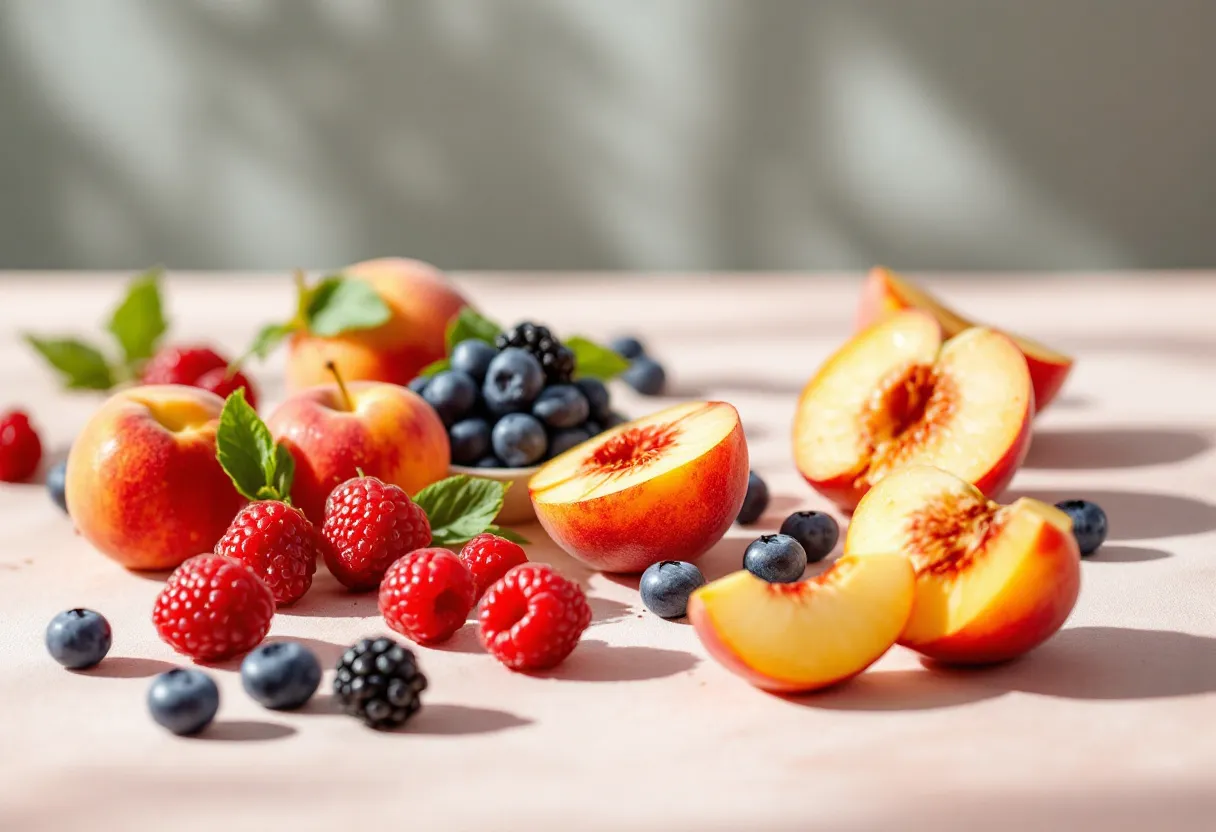
Fruity fragrance oils are juicy, sweet, and playful — apple, berry, peach, mango, and tropical fruits. Distinct from sharp citrus, fruity notes are rounder and sweeter, adding a fun, youthful lift to candles, soaps, and body products. They’re especially popular in summer and crowd-pleasing gift scents.
What Fruity Smells Like
The family ranges from orchard to tropical: apple and pear are crisp and fresh; berries (strawberry, raspberry, blackcurrant) are sweet and jammy; peach and apricot are soft and nectar-like; and mango, pineapple, and passionfruit bring a tropical punch. Fruity notes usually sit in the top-to-heart range.
Using Fruity Oils
Fruity scents can read as candy-sweet, so balancing them with a little floral, musk, or green note keeps them sophisticated. They behave well across candles and bath products. Our summer aquatic fragrance recipe blends fruit with marine freshness, and the citrus cologne recipe is a natural companion for bright, juicy blends. For correct usage percentages by product, see the fragrance oil usage rates guide.
Browse verified fruity fragrance oil suppliers above.
Cosmetic-Grade, Phthalate-Free, and Oil-Soluble
Fruity oils are bought for soap and bath products more often than most families, so the specification questions come up early. Four qualifiers show up constantly in listings for this family. They answer different questions, and none of them implies the others.
- Cosmetic-grade means the oil has been assessed for skin contact and comes with an IFRA certificate giving a maximum percentage per product type. It is a documentation claim, not a legal grade — what cosmetic-grade actually means.
- Skin-safe is used interchangeably with cosmetic-grade in this industry and carries the same caveat: there is no oil that is safe in an unlimited amount. How to tell whether an oil actually is.
- Phthalate-free means the oil is formulated without phthalate solvents. The chemistry is narrower than the headlines suggest and the reason to care is mostly commercial — the honest version.
- Oil-soluble means it disperses in oils and butters but not in water. For a water-based product you need a solubiliser or a water-soluble version, and an oil-soluble oil will separate.
The supplier cards on this page show which of these each supplier states, counted at the top. Those are the suppliers’ own claims, published as they publish them — we do not test oils, and no supplier pays us to appear here.
FAQ
What’s the difference between fruity and citrus fragrances? Citrus is sharp and zesty (lemon, lime, orange); fruity is rounder and sweeter (berry, peach, apple, tropical). Fruity notes read as juicy rather than tart.
Are fruity fragrance oils good for soap? Many are, but check the supplier’s cold-process notes — some sweet fruity oils discolor or accelerate trace. Test a small batch first.
How do I stop a fruity scent smelling like candy? Balance the sweetness with a small amount of floral, green, or musk note so the blend feels rounded and sophisticated instead of one-dimensional.